


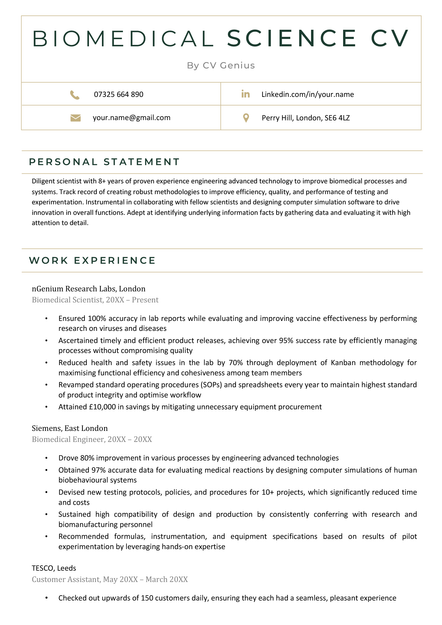
Medical student CV template (text format)
PERSONAL STATEMENT
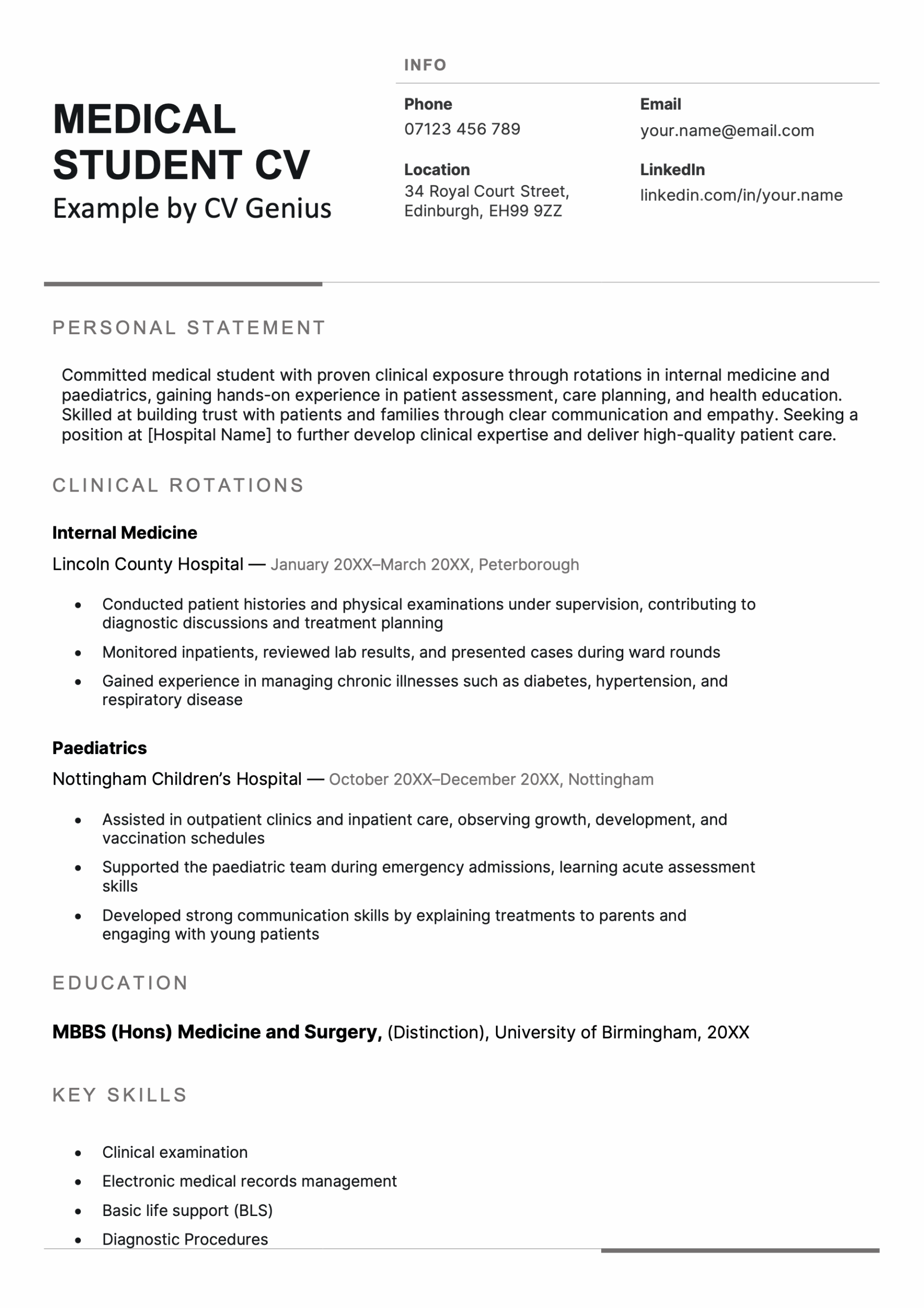
Committed medical student with proven clinical exposure through rotations in internal medicine and paediatrics, gaining hands-on experience in patient assessment, care planning, and health education. Skilled at building trust with patients and families through clear communication and empathy. Seeking a position at [Hospital Name] to further develop clinical expertise and deliver high-quality patient care.
CLINICAL ROTATIONS
Internal Medicine
Lincoln County Hospital — January 20XX–March 20XX, Peterborough
- Conducted patient histories and physical examinations under supervision, contributing to diagnostic discussions and treatment planning
- Monitored inpatients, reviewed lab results, and presented cases during ward rounds
- Gained experience in managing chronic illnesses such as diabetes, hypertension, and respiratory disease
Paediatrics
Nottingham Children’s Hospital — October 20XX–December 20XX, Nottingham
- Assisted in outpatient clinics and inpatient care, observing growth, development, and vaccination schedules
- Supported the paediatric team during emergency admissions, learning acute assessment skills
- Developed strong communication skills by explaining treatments to parents and engaging with young patients
EDUCATION
MBBS (Hons) Medicine and Surgery, (Distinction), University of Birmingham, 20XX
KEY SKILLS
- Clinical examination
- Electronic medical records management
- Basic life support (BLS)
- Diagnostic Procedures
How to write a medical student CV
As a medical student, your CV is your key tool for applying to electives, clinical placements, research roles, or part-time work within healthcare.
Even though you’ve just gotten started in your career, your CV should demonstrate your commitment to medicine (and your patients), practical experience, and readiness to learn.
Here are five expert tips for writing a CV that stands out if you’re a medical student:
1. Start with a strong CV profile
Your personal profile is a brief (3–6 line) introduction at the top of your CV. Use it strategically to highlight your progress in medical school, clinical exposure so far, and your enthusiasm for progressing in medicine.
Don’t be afraid to tailor this section to reflect your career interests — this will help potential employers determine your best fit in their hospital or clinic.
Example CV profile for a medical student
Final-year medical student at Queens University Belfast with clinical experience across internal medicine, paediatrics, and psychiatry. Passionate about patient-centred care and developing practical skills in acute settings. Eager to apply strong communication and problem-solving abilities in a dynamic NHS team.
2. Detail clinical placements and practical experience
Even as a student, you’ll have gained hands-on medical experience through rotations, shadowing, and voluntary roles.
List these experiences clearly under your work experience or clinical placements section, and highlight the key skills, achievements, and duties you developed or were responsible for.
Example clinical placement entry
General Medicine Placement – Scunthorpe Royal NHS Foundation Trust
September 20XX – November 20XX
- Took patient histories and performed supervised clinical examinations
- Observed ward rounds, MDT meetings, and handovers
- Performed venepuncture and cannulation on 30+ patients under supervision
- Participated in a mini-audit on antibiotic prescribing practices
Be sure to mention any research projects, QIPs, or teaching sessions you’ve contributed to as part of your clinical experience. The more medical training you undertook as part of these experiences means future mentors will have less to teach you to do.
3. Tailor your CV with medical keywords
To pass screening checks and appeal to NHS recruiters or university supervisors, include key medical terms that reflect your training and readiness.
In particular, try to mirror the language used in the advert for the opportunity you’re applying for to show the hiring team you’ve thoroughly understood their needs.
Useful words on a CV for a medical student include:
- Patient assessment and history taking
- Basic life support (BLS) certified
- Clinical audit participation
- MDT (multidisciplinary team) working
- Clinical documentation and record-keeping
- Compliance with NHS protocols and guidelines
- Patient confidentiality and safeguarding
If you’ve completed specific modules (e.g., pharmacology, anatomy, or medical ethics), list them in your education section or as part of relevant experience.
4. Quantify your medical experience
Even in early-stage medical training, adding numbers to your CV helps quantify your CV achievements.
Examples of good numbers to add to your CV include how many patients you’ve worked with, procedures you’ve performed, or audits you’ve participated in.
Examples of metric-based achievements in a work history section
- Completed clerking and examination of 75+ inpatients across medical and surgical wards at a major NHS Trust
- Assisted in the management of 20+ acutely unwell patients during night shifts as part of the on-call medical team
- Participated in 3 clinical audits, including a Trust-wide review of hand hygiene compliance
- Supported the vaccination of 500+ patients during an NHS flu vaccination drive
- Performed ECGs on 60+ patients, accurately documenting results in electronic health records (EHRs)
- Led 4 case-based discussion sessions for Year 3 medical students on cardiology topics
- Shadowed multidisciplinary team (MDT) meetings in oncology and contributed to 10+ case discussions
- Conducted blood pressure checks and basic health screenings for 200+ patients at NHS community outreach events
- Took part in 3 simulation-based Advanced Life Support (ALS) training courses, successfully passing the assessment
- Collaborated with surgical teams in 8 elective theatre lists, assisting with pre-operative preparation and post-op patient reviews
These metrics provide clear evidence of your growing skills and experience.
5. Highlight your medical and interpersonal skills
Your CV should demonstrate a balance of technical skills and soft skills essential for working effectively with patients and healthcare teams.
Here are examples of technical skills to list in your skills section:
- Catheterisation (male and female)
- Arterial blood gas (ABG) sampling
- Wound dressing and management
- Intravenous (IV) medication administration
- Basic airway management (e.g., use of oropharyngeal airways)
- Recognising and managing sepsis (Sepsis 6 protocol)
- Performing neurological assessments (e.g., GCS scoring)
- Assisting in lumbar punctures under supervision
- Basic interpretation of laboratory results (e.g., FBC, U&Es)
- CPR and basic life support (BLS) techniques
And here are examples of soft skills to weave into your work experience bullet points:
- Communication and teamwork
- Empathy and patient rapport
- Good bedside manner
- Problem-solving in high-pressure situations
- Adaptability and resilience
- Organisational skills for managing academic and clinical commitments
Example of soft skills in a bullet point
- Demonstrated strong communication skills when explaining diagnostic procedures to patients, ensuring clarity and reducing anxiety
By presenting your clinical exposure, quantifiable achievements, and a mix of hard and soft skills, your medical student CV will ensure hospitals, surgeries, and clinics view you as a capable, motivated future doctor ready to contribute to patient care and clinical teams.
Skip the writer’s block and make a CV in minutes with our AI software.
More CV & Cover Letter Examples:








Copy Link
Facebook
Linkedin
Twitter
Pinterest