


Lab Technician CV Template (Text Format)
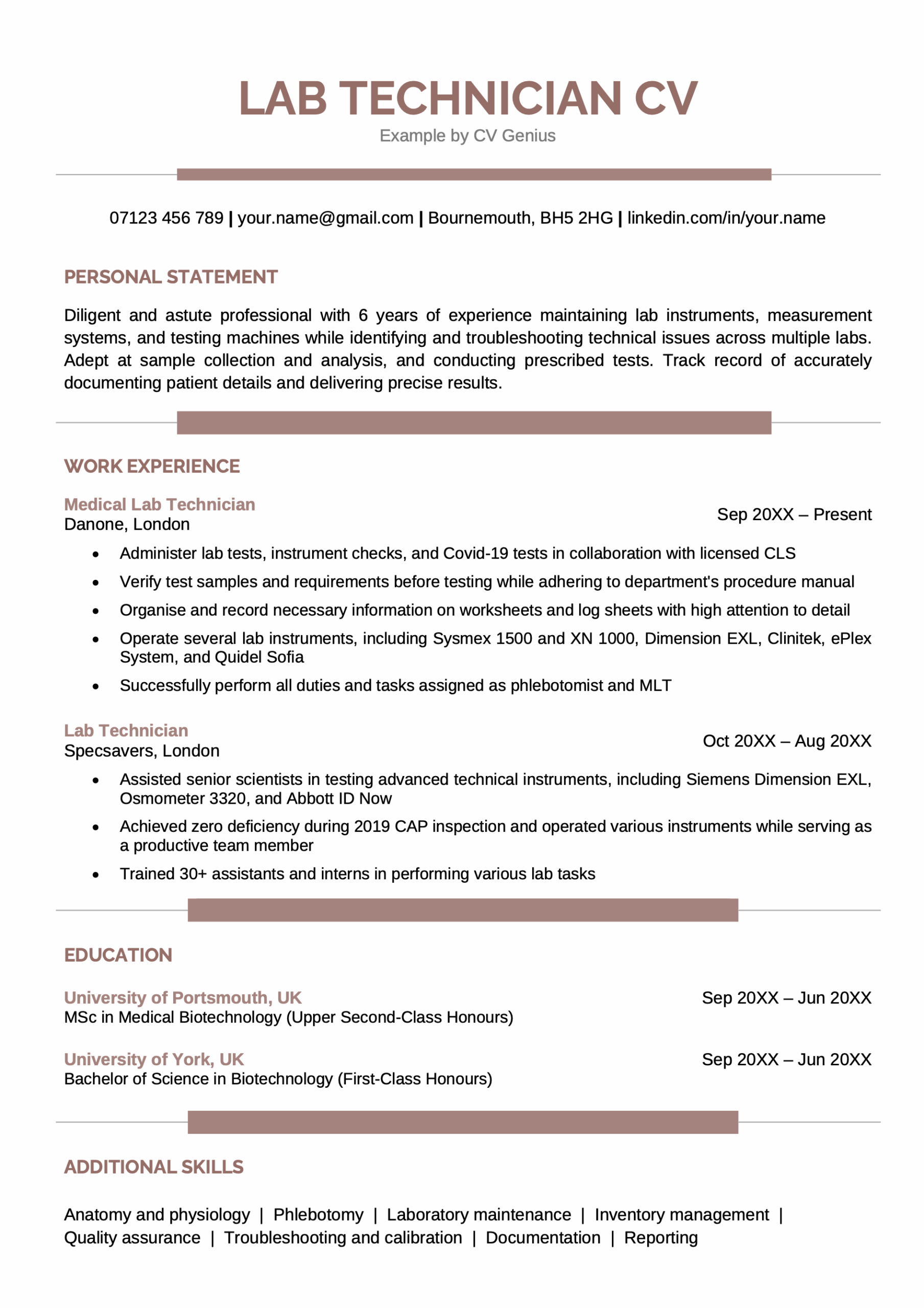
PERSONAL STATEMENT
Diligent and astute professional with 6 years of experience maintaining lab instruments, measurement systems, and testing machines while identifying and troubleshooting technical issues across multiple labs. Adept at sample collection and analysis, and conducting prescribed tests. Track record of accurately documenting patient details and delivering precise results.
WORK EXPERIENCE
Medical Lab Technician, Sep 20XX – Present
Danone, London
- Administer lab tests, instrument checks, and Covid-19 tests in collaboration with licensed CLS
- Verify test samples and requirements before testing while adhering to department’s procedure manual
- Organise and record necessary information on worksheets and log sheets with high attention to detail
- Operate several lab instruments, including Sysmex 1500 and XN 1000, Dimension EXL, Clinitek, ePlex System, and Quidel Sofia
- Successfully perform all duties and tasks assigned as phlebotomist and MLT
Lab Technician, Oct 20XX – Aug 20XX
Specsavers, London
- Assisted senior scientists in testing advanced technical instruments, including Siemens Dimension EXL, Osmometer 3320, and Abbott ID Now
- Achieved zero deficiency during 2019 CAP inspection and operated various instruments while serving as a productive team member
- Trained 30+ assistants and interns in performing various lab tasks
EDUCATION
MSc in Medical Biotechnology (Upper Second-Class Honours), Sep 20XX – Jun 20XX
University of Portsmouth, UK
Bachelor of Science in Biotechnology (First-Class Honours), Sep 20XX – Jun 20XX
University of York, UK
ADDITIONAL SKILLS
- Anatomy and physiology
- Phlebotomy
- Laboratory maintenance
- Inventory management
- Quality assurance
- Troubleshooting and calibration
- Documentation
- Reporting
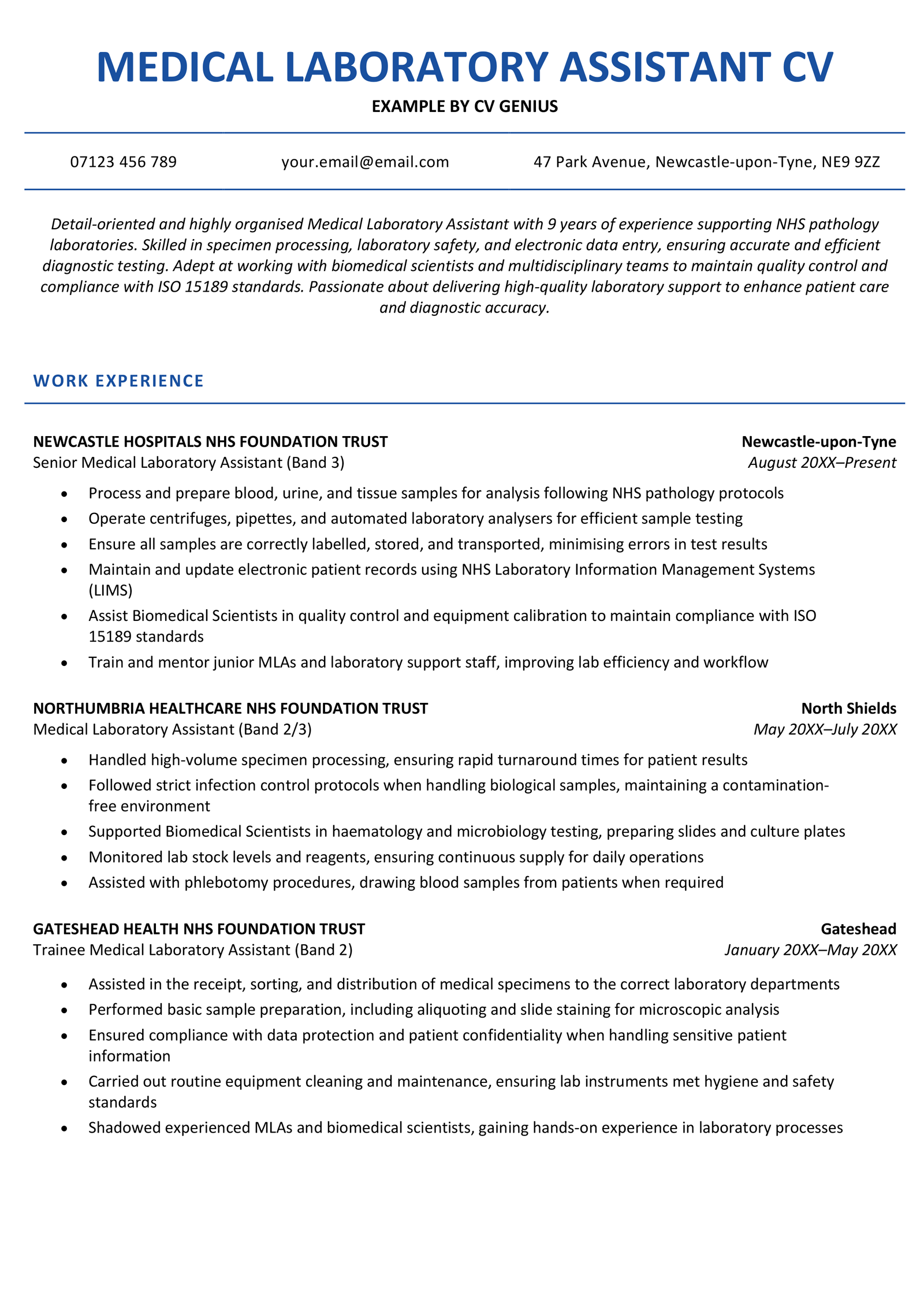
Medical Laboratory Assistant CV Example
If you’re specifically applying for a role in a medical lab, provide employers with a CV like this:
How to write a lab technician CV that lands interviews
If it’s been a while since you wrote a CV, brush up on general CV writing principles first — then check out these targeted tips for making a lab technician CV that stands out to employers:
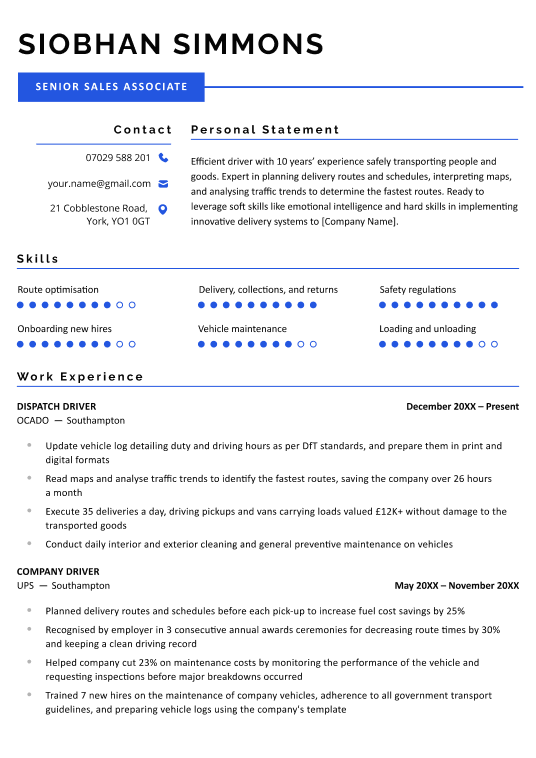
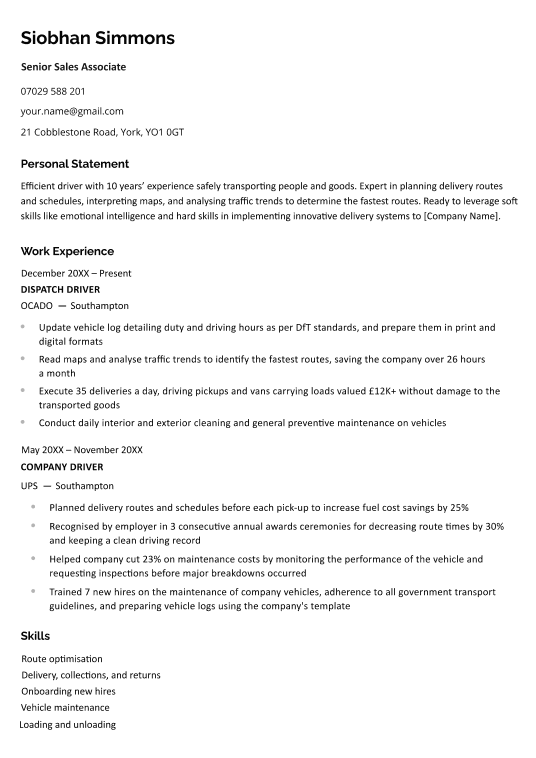
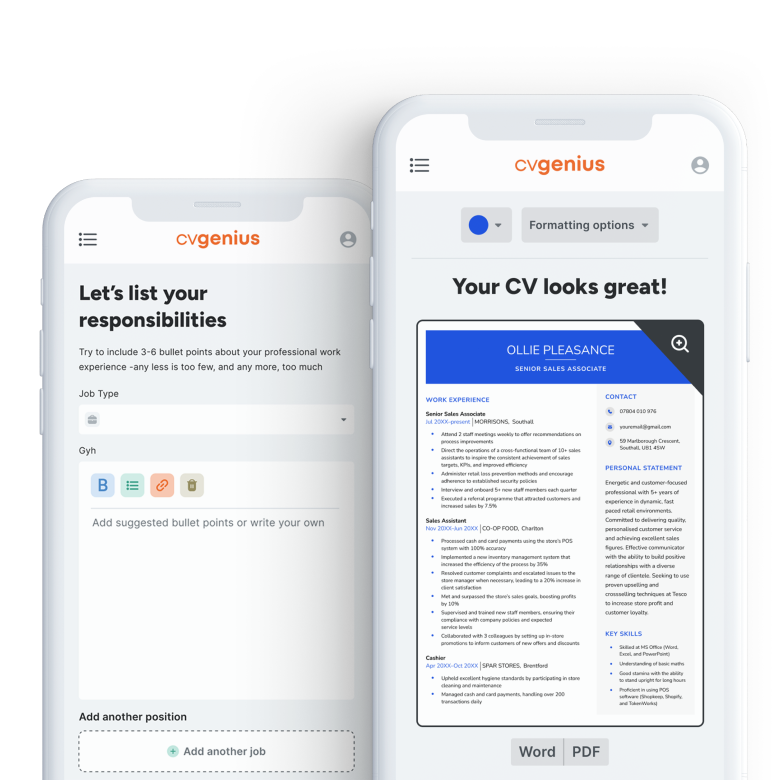
Skip the writer’s block and make a CV in minutes with our AI software.
1. Highlight relevant qualifications & technical training in your education section
Lab employers are looking for a strong foundation in lab-based education.
Include your qualifications like a BTEC, HNC/HND, or degree in a scientific subject (e.g., biology, chemistry, biomedical science) prominently in your education section.
Technical training in lab safety, LIMS systems, or COSHH awareness can also help your CV stand out, especially in NHS or regulated lab environments.
Example education section
Education
- BTEC Level 3 National Diploma in Applied Science – UHI Inverness, Inverness-shire, 20XX–20XX
- COSHH Awareness Training – Completed 20XX
- LIMS System Training – NHS Trust Internal Programme, 20XX
2. Prove your ability to handle patient data securely in your experience section
As a lab technician, you may be responsible for recording and managing patient information, sometimes through digital systems like LIMS.
Show employers that you understand data protection obligations, such as GDPR and Caldicott principles, through a well-written work experience bullet point.
Example bullet point
- Maintained full compliance with GDPR and Caldicott guidelines when entering patient data into LIMS for 2,500+ tests per year
3. Tailor your CV personal statement to the type of lab you want to work in
Lab technician roles vary widely depending on the setting — whether it’s a medical, pharmaceutical, environmental, or research lab.
Customise your personal statement to reflect the lab type you’re targeting to show employers you understand the industry and have relevant experience or interest. It’s your first chance to show you’re not just a skilled technician, but one who fits their specific environment and mission.
Example CV personal statement
Personal Statement
Detail-oriented lab technician with 3+ years of experience supporting sample analysis and equipment maintenance in busy NHS clinical laboratories. Skilled in handling biological specimens, maintaining sterile environments, and following strict documentation protocols. Passionate about contributing to patient care by ensuring accurate testing processes. Now seeking to bring my knowledge of clinical diagnostics and quality assurance to a hospital-based pathology lab.
4. Emphasise your experience with sample handling and equipment operation
Sample collection, preparation, and storage are core tasks for lab technicians, and so is operating and cleaning lab equipment.
Show hiring managers your technical skills throughout your work history section: specifically, that you’re confident handling biological or chemical materials, know how to follow safety protocols, and are familiar with lab machinery or systems relevant to your field.
Example bullet point
- Prepared and labelled 4,000+ biological samples annually for diagnostic testing, ensuring 99% compliance with SOPs
5. Highlight your understanding of safety procedures in your skills section
A lab technician must know how to work safely with potentially hazardous materials and equipment.
Employers want to see awareness of COSHH regulations, PPE usage, and general lab safety practices. Highlight this expertise in your skills list — and back it up with examples in your experience section.
Example key skills section
Key Skills
- COSHH compliance
- Laboratory health & safety
- Use of PPE
- Infection prevention and control
- Risk assessment procedures
Lab technician job outlook in 2026 — things to know
According to the UK Earnings Explorer provided by the Office for National Statistics (ONS), lab technicians in the UK earn an average annual salary of £25,612.
You can find information about the gender pay gap for lab technicians on the ONS’ website.
The ONS also notes that this role faces a skills shortage, with 24.60% of employers reporting difficulties filling similar vacancies.
To strengthen your CV for a data analyst role, highlight these key qualifications and licences:
- Degree in relevant field
- BOHS qualifications in relevant field
- Knowledge of HSSE quality standards
- Knowledge of chemical safety
- Laboratory experience
- MS Office competency
If you’re missing any of these qualifications, consider enrolling in a course, training programme, or work-based learning scheme to boost your profile.
More CV & Cover Letter Examples:









Copy Link
Facebook
Linkedin
Twitter
Pinterest