


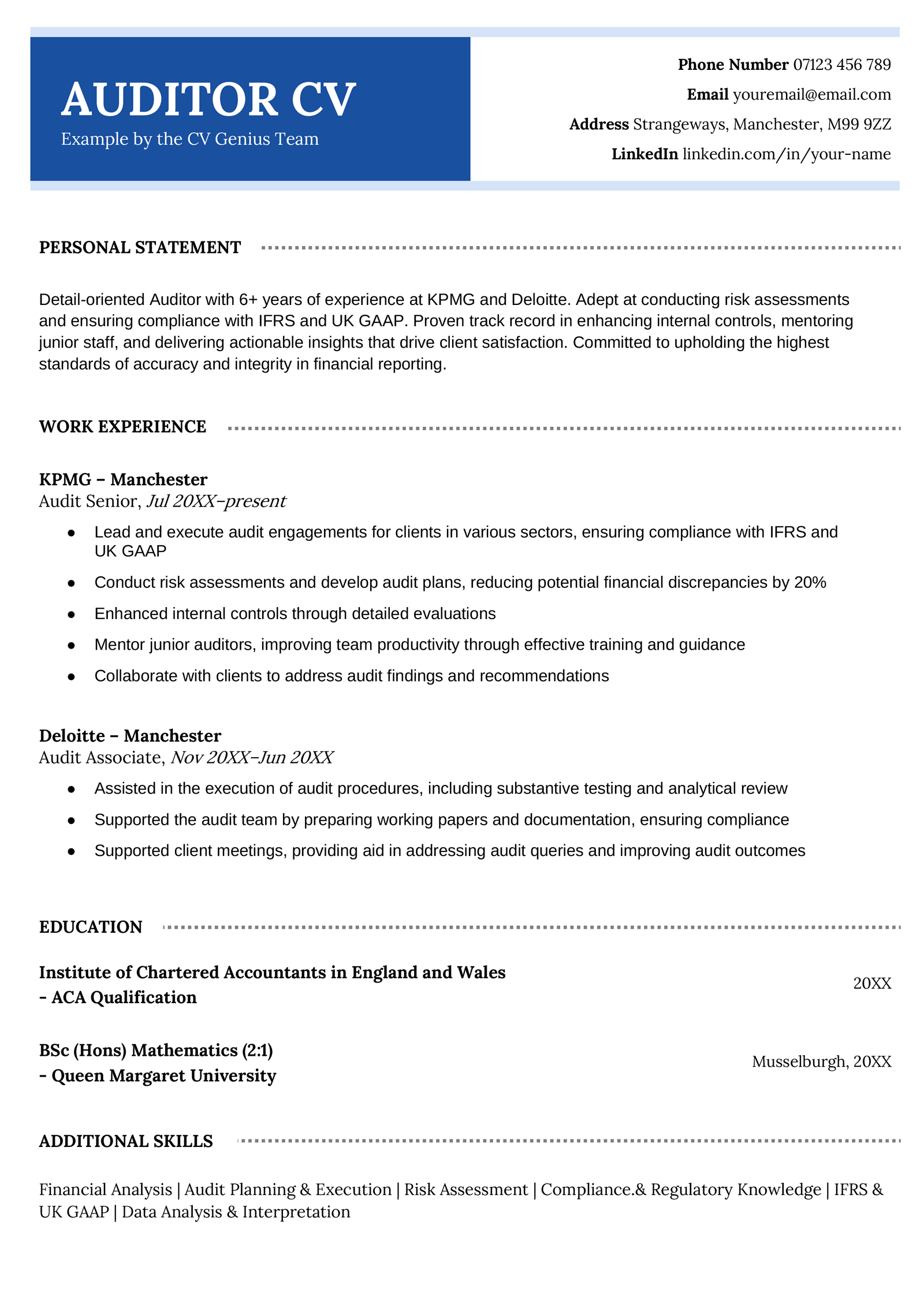
Auditor CV Template (Text Format)
PERSONAL STATEMENT
Detail-oriented Auditor with 6+ years of experience at KPMG and Deloitte. Adept at conducting risk assessments and ensuring compliance with IFRS and UK GAAP. Proven track record in enhancing internal controls, mentoring junior staff, and delivering actionable insights that drive client satisfaction. Committed to upholding the highest standards of accuracy and integrity in financial reporting.
WORK EXPERIENCE
Audit Senior
KPMG – Manchester | Jul 20XX – Present
- Lead and execute audit engagements for clients in various sectors, ensuring compliance with IFRS and UK GAAP
- Conduct risk assessments and develop audit plans, reducing potential financial discrepancies by 20%
- Enhanced internal controls through detailed evaluations
- Mentor junior auditors, improving team productivity through effective training and guidance
- Collaborate with clients to address audit findings and recommendations
Audit Associate
Deloitte – Manchester | Nov 20XX – Jun 20XX
- Assisted in the execution of audit procedures, including substantive testing and analytical review
- Supported the audit team by preparing working papers and documentation, ensuring compliance
- Supported client meetings, providing aid in addressing audit queries and improving audit outcomes
EDUCATION
- ACA Qualification, Institute of Chartered Accountants in England and Wales — 20XX
- BSc (Hons) Mathematics, Queen Margaret University, Musselburgh — Upper Second-Class Honours (2:1), 20XX
ADDITIONAL SKILLS
- Financial Analysis
- Audit Planning & Execution
- Risk Assessment
- Compliance & Regulatory Knowledge
- IFRS & UK GAAP
- Data Analysis & Interpretation
How to write an auditor CV
Given the important role auditors play in ensuring company compliance and managing risk, your auditor CV needs to demonstrate the right technical and analytical skills as well as unfailing attention to detail.
Here’s how to write a CV that makes your expertise stand out at even a passing glance.
1. Highlight financial expertise in your personal statement
Hook the employer by highlighting your financial expertise and key skills in your personal statement.
Start by mentioning your years of experience and areas of specialisation, such as external or internal auditing, risk assessment, or forensic accounting.
Then, mention any specific industries you’ve worked in (e.g., finance, healthcare, manufacturing) and your proficiency with relevant regulations such as UK GAAP, IFRS, or Sarbanes-Oxley.
End by specifying why you’re interested in the position and demonstrating your commitment to ensuring accurate financial reporting.
Example auditor personal statement
Detail-oriented Auditor with 7+ years of experience in financial audits, internal control assessments, and compliance across healthcare and retail sectors. Proven track record of mitigating financial risks and enhancing operational efficiencies by implementing best audit practices. Adept at navigating IFRS and Sarbanes-Oxley compliance standards. Eager to bring my expertise in risk management to the Internal Auditor position at [Company Name], and contribute to your excellent reputation of financial integrity within the tech sector.
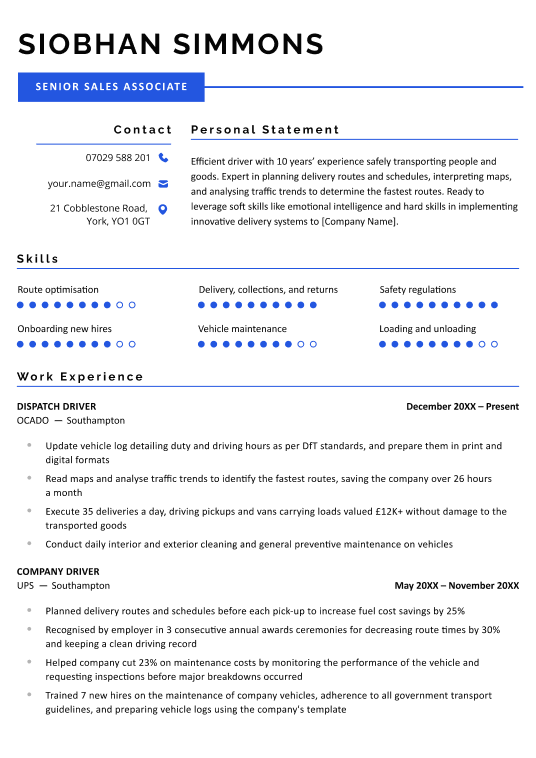
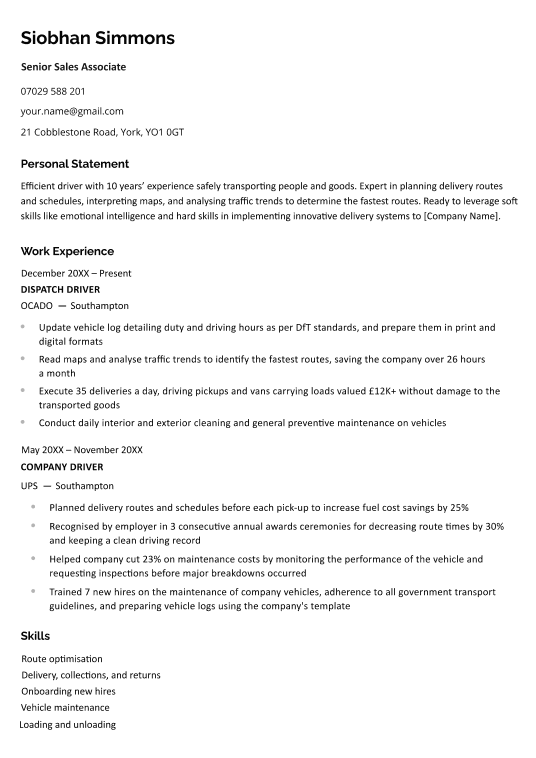
Skip the writer’s block and make a CV in minutes with our AI software.
2. Create a concise list of your relevant skills
Your skills section should be a concise list of the technical auditing knowledge and other hard skills that they employer is looking for.
Focus on competencies that showcase your analytical skills and understanding of audit procedures.
Great skills for an auditor CV
- Internal auditing
- External auditing
- Financial analysis
- Risk management (e.g., audit procedures and internal controls)
- Compliance knowledge (e.g., UK GAAP)
- Audit software (CaseWare, ACL)
- Stakeholder communication
3. Lay out your work experience
The work experience section should demonstrate your practical auditing experience, focusing on achievements rather than responsibilities.
If you’re applying for an internal auditor position, highlight any experience ensuring internal processes, controls, and systems within an organisation are effective, efficient, and compliant with regulations.
Some key areas to highlight include:
- Risk management
- Internal controls
- Operational efficiency
- Compliance with internal policies and regulations (e.g., IFRS, UK GAAP)
For external auditor positions, you should demonstrate your ability to focus on independent assessments of financial statements and regulatory compliance for various clients across industries.
Employers often need to know about the following knowledge areas:
- Client engagements
- Financial reporting
- Regulatory compliance
- Audit procedures (e.g., substantive auditing, risk assessments)
- Client relationships
Example
Internal Auditor
KPMG, London | March 20XX – Present
- Conducted risk-based internal audits, leading to the identification of operational inefficiencies and cost savings of £4.7 mil. annually
- Reviewed and tested internal controls across 15 business units, ensuring compliance with IFRS standards
- Implemented a streamlined audit process that reduced audit completion time by 25%
- Collaborated with the finance team to rectify discrepancies, improving financial reporting accuracy by 15%
4. Fill in your education section
Your education section should list your accounting or finance qualifications.
Most auditor roles require at least a bachelor’s degree or a relevant apprenticeship through the Chartered Institute of Internal Auditors (e.g., Level 4 Internal Audit Practitioner).
Keep this section concise, including only the qualification name, the institution you got the qualification from, the classification, and when it was awarded.
Example
BSc (Hons) Accounting and Finance (1st)
University of Birmingham | Graduated: 20XX
5. Add certifications to show continued professional development
Certifications are highly valued in auditing and show that you have the expertise needed to do the job.
Two highly respected certifications that can make your CV stand out are Chartered Internal Auditor (CIA) and Chartered Accountant (ACA).
Example certifications section
- ACCA (Association of Chartered Certified Accountants), 20XX
- Chartered Internal Auditor (CIA), Institute of Internal Auditors, 20XX
- CISA (Certified Information Systems Auditor), 20XX
- ACA (Associate Chartered Accountant), ICAEW, 20XX
Auditor job outlook in 2026 — things to know
According to the UK Earnings Explorer provided by the Office for National Statistics (ONS), auditors in the UK earn an average annual salary of around £59,000.
You can find information about the gender pay gap for auditors on the ONS’ website.
More CV & Cover Letter Examples:








Copy Link
Facebook
Linkedin
Twitter
Pinterest