




Graduates entering the UK job market are facing a hiring process that rewards clarity, credibility, and role-readiness more than ever. Employers are increasingly looking for signals they can verify, rather than relying on educational background alone.
Our 2026 New Year, New Job Search Report explains how hiring managers assess early-career candidates today, the mistakes they see most often, the behaviours that influence behind-the-scenes decisions, and the practical steps early-career job seekers can take to stand out.
Skills-first hiring is the new normal
Skills-first hiring is increasingly shaping how employers evaluate candidates, with a stronger focus on what you can do than on background signals alone.
In practice, this means job seekers need to make their skills easy to see. Rather than expecting recruiters to infer capability from job titles or education, you have to show it through specific examples, measurable outcomes, and the tools or methods you’ve used.
What hiring managers are telling us
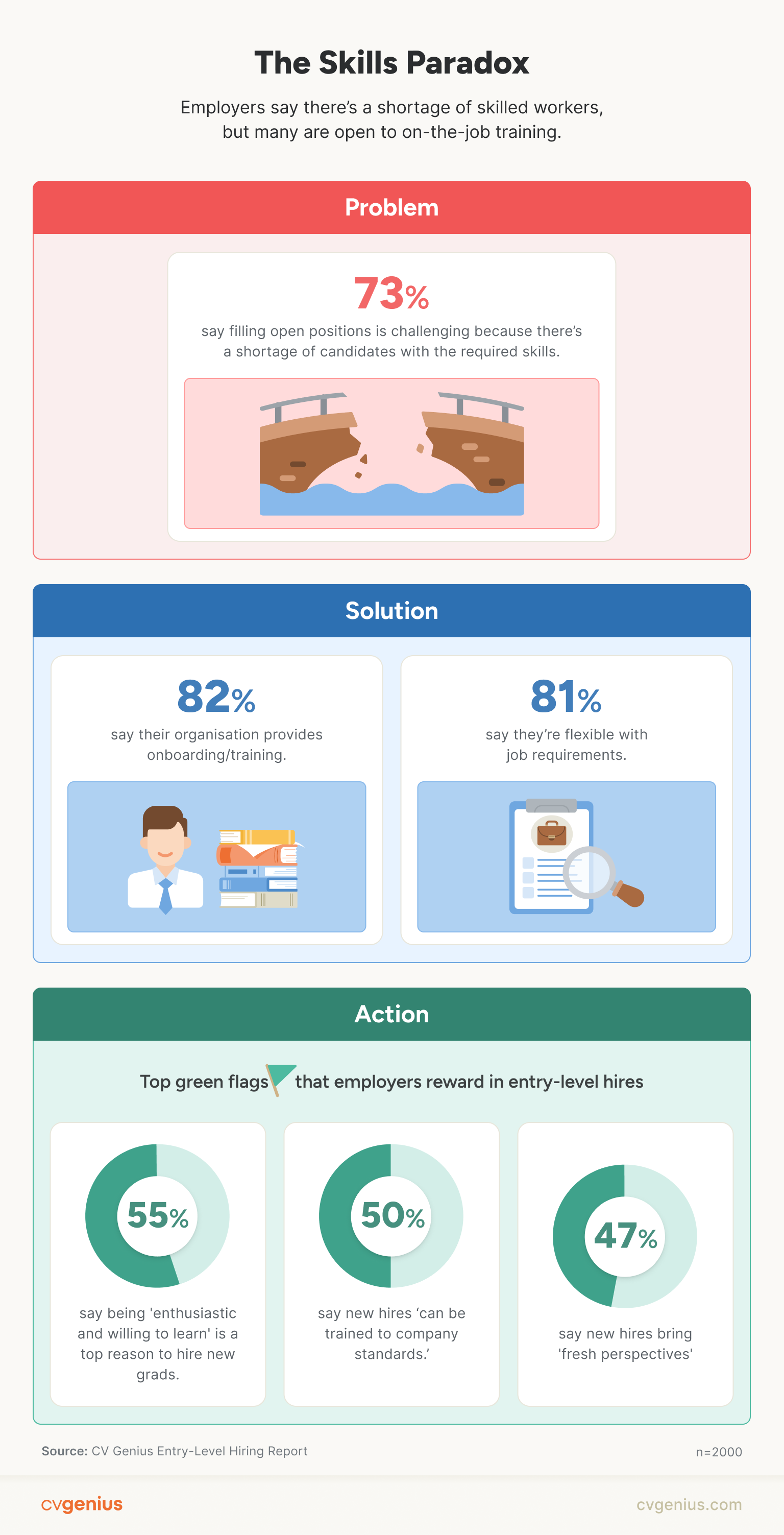
- 73% say filling open positions is challenging because there’s a shortage of candidates with the required skills
- 61% say soft skills are top attention-getters, and 56% say job-specific technical skills stand out — compared with 38% for academic performance and 15% for certifications and awards
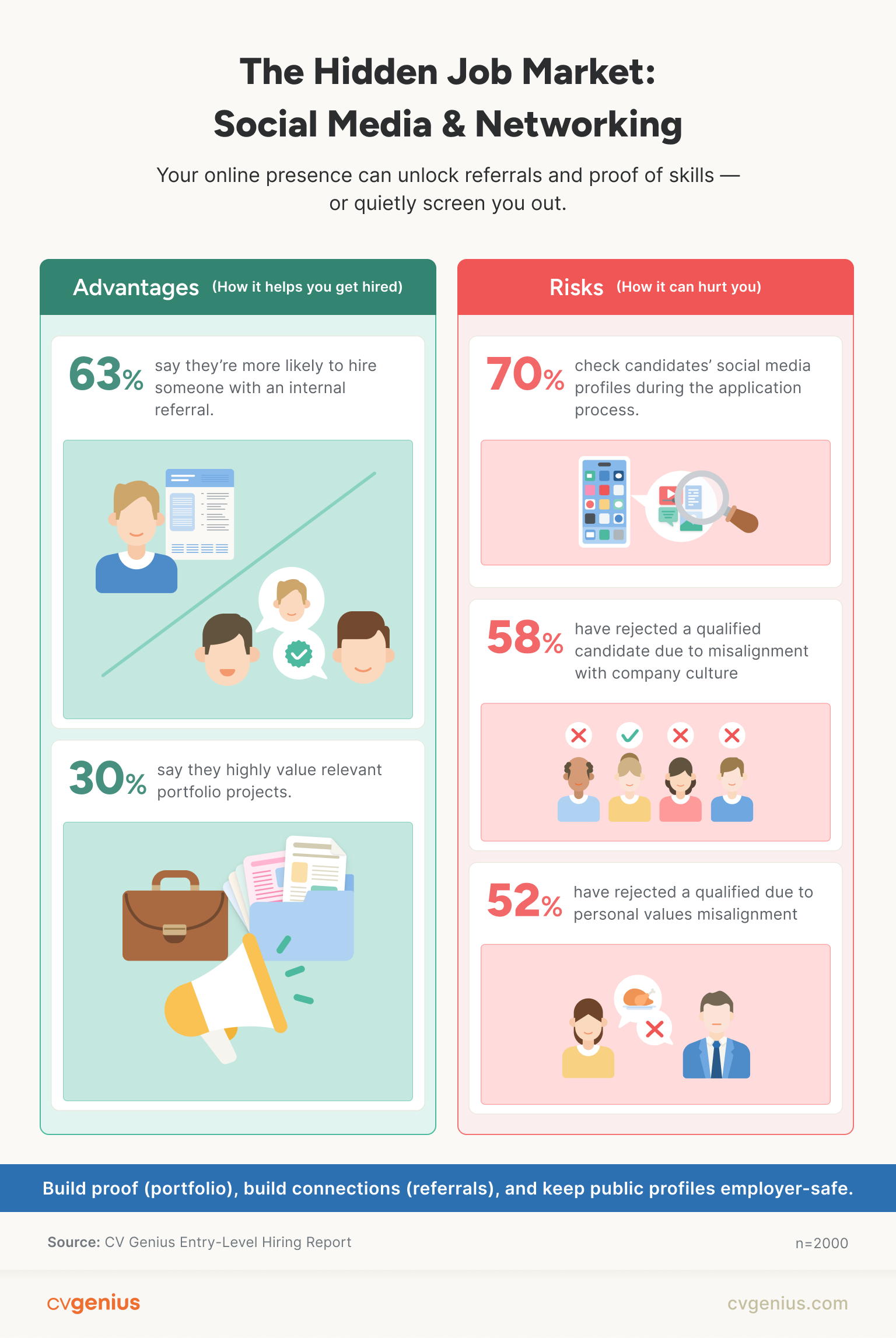
- 30% say they value relevant portfolio projects, compared with 16% for internships and 19% for part-time jobs
- 41% agree that education is more important than work experience for entry-level roles
What job seekers can do in the new year
- Build proof for 1–2 role-aligned hard skills in Q1: Create something you can point to (a project, certification, portfolio piece, or work sample) that shows the skill in action
- Translate experience into quickly recognisable skills: For each role or project, highlight the outcome, the tools or methods you used, and what changed because of your work
- Mirror the job description’s skill language (without copying): Use the terms employers use so recruiters can connect your experience to their requirements at a glance
Trainability and commitment are the top green flags for entry-level hires
For entry-level roles, employers aren’t just hiring for what you can do today — they’re hiring for how quickly you can learn, and how dependable you are.
That’s why the strongest applications don’t try to ‘sound senior’. Instead, they make it easy to see that you’ll ramp up fast, take feedback well, and stay long enough to become a valuable contributor.
In your CV and interviews, mention specifics: how you learn, how you follow through, and why this role and this company actually fit what you want to do next.
What hiring managers are telling us
- Top reasons to hire recent grads: enthusiastic/willing to learn (56%), can be trained to company standards (50%), and fresh perspectives (47%)
- Training and flexibility are common: 82% say their organisation provides onboarding/training, and 81% say they’re flexible with job requirements
- Top dealbreakers: lack of commitment (44%), inadequate soft skills (39%), and work ethic concerns (37%)
What job seekers can do in the new year
- Bake trainability into your story: Show how you learn, take feedback, and ramp up quickly using real examples (not just claims)
- Show commitment with specifics: Explain why this role, why this company, and what you want to grow into next
- Use examples that show ownership: Mention times you met deadlines, followed through, improved a process, or took responsibility when something went wrong
CV presentation quality is a big differentiator
When hiring teams are reviewing high volumes of applications, first impressions are essential — and CV presentation can be the difference between being passed over and being shortlisted.
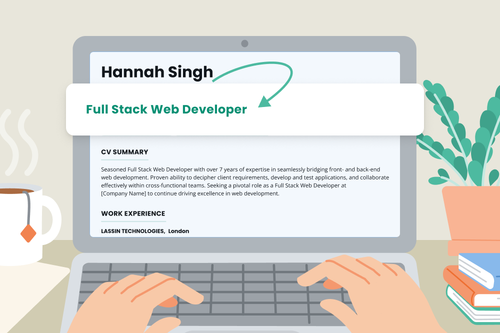
A strong CV doesn’t need to be flashy. It does need to be easy to scan, consistent, and error-free so your skills and experience come through clearly.
What hiring managers are telling us
- 42% say a clear, well-structured CV is ‘very important’, and 37% say relevant work experience is ‘very important’
- Common issues hiring managers say they see ‘always’ or ‘often’ include generic CVs/cover letters (45%), spelling/grammar errors (44%), and poor formatting (41%)
What job seekers can do in the new year
- Treat formatting and clarity as a competitive advantage: Use a clean structure, consistent spacing, and clear section headings so your CV is scannable in seconds
- Tailor the top third, keep the rest stable: Customise your summary and first role so the most relevant proof appears immediately, without rewriting your entire CV for each application
- Proofread like it’s part of the interview: Read your CV aloud, run basic checks, and get a second opinion before you submit
AI is reshaping hiring, both positively and negatively
AI tools are becoming more common in both hiring and job searching, but the way candidates use them can either strengthen an application — or underline it.
What hiring managers are telling us
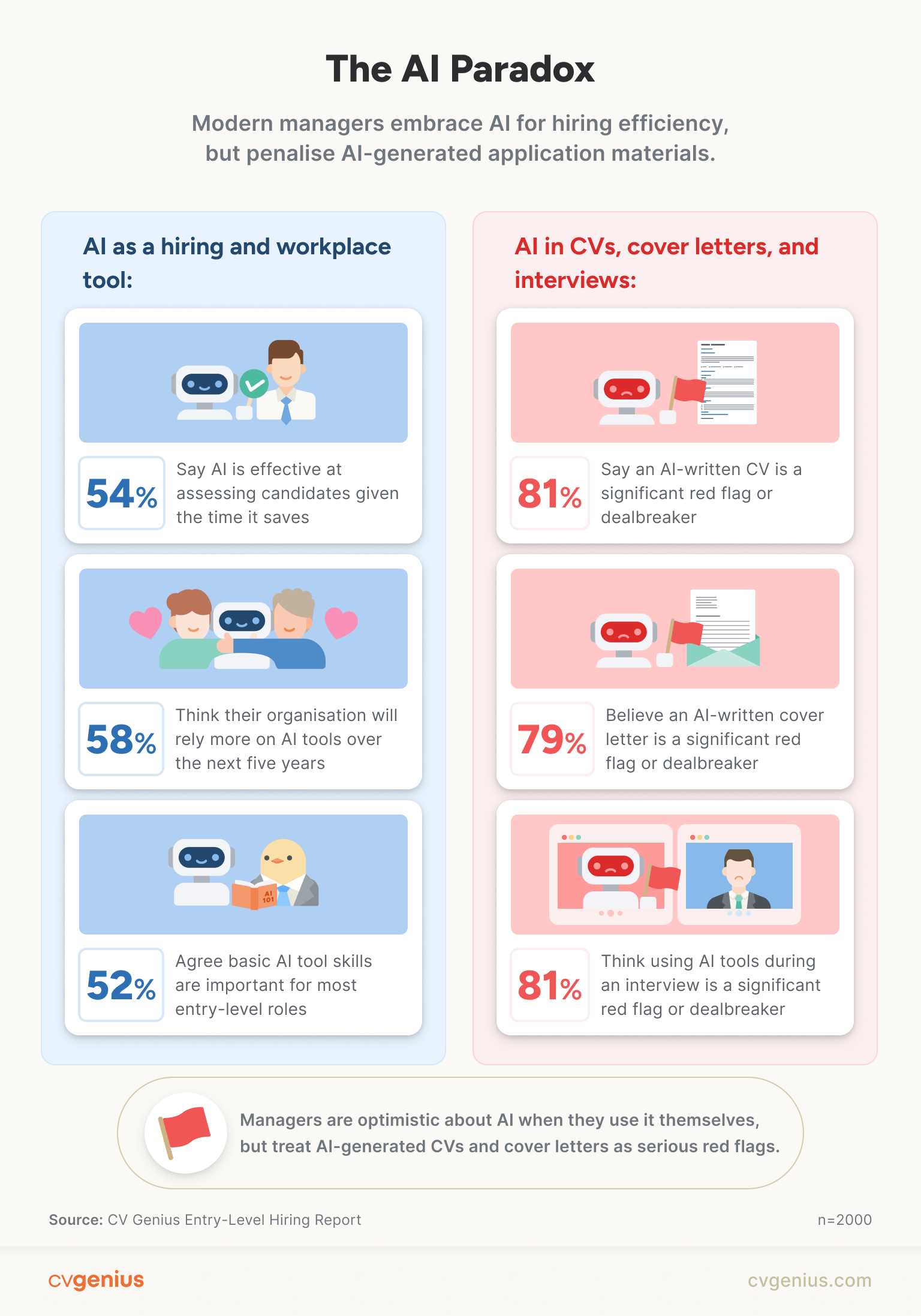
- AI use is growing: 59% say their organisation plans to increase reliance on AI in hiring over the next five years, and 46% say they already use AI tools to help screen or evaluate candidates
- Generated CVs are risky: 56% rate obviously AI-written CVs as a significant negative or dealbreaker
- Hiring managers say they commonly spot CVs that appear entirely AI-written (33% always/often) and visible AI prompt text pasted into cover letters (27% always/often)
What job seekers can do in the new year
- Use AI for structure and brainstorming — then rewrite in your own voice and verify every claim before you submit
- Never paste prompt text or placeholders into applications: Do a final ‘human check’ before submitting
- Show AI readiness the right way: Share examples of using tools to do better work, rather than using AI to sound more experienced than you are
Your social media footprint and professional conduct matters more than ever
Job searching isn’t only about qualifications. How you network, interview, follow up, and negotiate also influence outcomes, and social media is increasingly part of how candidates are assessed.
A simple, repeatable process helps you show professionalism at every step, even when the market feels unpredictable.
What hiring managers are telling us
- Referrals still matter: 63% say they’re more likely to hire someone with an internal referral
- Common candidate missteps hiring managers say they see ‘always/often’ include:
- not sending follow-up or thank-you messages (50%)
- not asking questions (35%)
- showing little preparation (32%)
- On negotiation, 79% agree a well-researched, respectful negotiation reflects positively, and 72% say negotiating typically doesn’t hurt even if they can’t raise the offer
- However, 39% say they have withdrawn an offer solely because a candidate tried to negotiate
- Social screening is common: 76% of hiring managers check candidates’ social media profiles at least once during the application process
What job seekers can do in the new year
- Build referral momentum: Focus on targeted networking, informational chats, and warm introductions from people on relevant teams
- Create a repeatable interview system: Keep a story bank, prepare role-specific questions, and use a simple follow-up template
- Negotiate with evidence: Use market ranges, role scope, and your value — and keep it respectful and specific
- Keep public social profiles employer-friendly: Make anything potentially controversial or polarising private, and be mindful of your digital footprint
- Stay professional throughout: Even if you’re ghosted or treated poorly, keep your responses professional — you don’t know what future opportunities may come through that network
Conclusion
Our report shows how hiring priorities are shifting across the UK early-career job market in 2026. Hiring managers continue to emphasise skills-first evaluation, with strong attention on candidates who can demonstrate role-relevant capabilities alongside soft skills.
For entry-level hiring in particular, willingness to learn and perceived commitment remain major green flags. At the same time, avoidable issues such as generic applications, presentation errors, and weak follow-through continue to be common reasons candidates fall short.
Taken together, the data suggests that beyond qualifications, candidates are being assessed on how clearly they communicate their skills, how polished their application materials are, and how professionally they conduct themselves throughout the application process.
And in a hiring landscape where organisations report receiving ever-growing numbers of AI-generated applications, standing out increasingly depends on clarity, credibility, and consistency — supported by thoughtful use of AI tools to increase productivity while retaining your natural voice and personality.
Methodology
This report is based on a survey of 2,000 UK hiring managers for entry-level roles, conducted by Pollfish using its Random Device Engagement (RDE) methodology to ensure a diverse, demographically balanced sample. Respondents were screened to confirm they were directly responsible for hiring or managing entry-level employees within their organisation.
The survey covered key topics including experience requirements, desired skills, application behaviours, interviewing practices, AI usage, negotiation attitudes, and demographic differences across age and gender groups.
Data analysis was conducted by CV Genius using standard statistical methods to produce overall findings and demographic comparisons. The analysis was conducted in Python, with libraries such as Pandas and NumPy, alongside manual review. Percentages were rounded to the nearest whole number, with any deviations falling within standard rounding margins. For further details or media inquiries, please contact sade@cvgenius.com.
About CV Genius
CV Genius is the go-to CV maker for UK job seekers of all industries and experience levels. CV Genius also offers a powerful cover letter generator, extensive CV template library, industry-specific CV examples, as well as guides on how to write a perfect CV and cover letter.
Backed by a team of expert career advisors and HR specialists, CV Genius provides in-depth guidance on CV writing, job search strategies, and interview preparation. Its expertise has been featured in leading publications including The Times, the BBC, Forbes, Business Insider, Glassdoor, and MSN.
For media inquiries, please contact us.









Copy Link
Facebook
Linkedin
Twitter